It is no secret that low back pain affects a large majority of the United States population. According to the Centers for Disease Control and Prevention (CDC), 39% of adults experienced a new onset of low back pain in 2019 alone.1 This makes low back pain one of the most common diagnoses in the outpatient orthopedic clinic. So how do we treat low back pain?
Low back pain is often the result of many factors, so it often requires a variety of interventions to achieve the best outcomes. The McKenzie Method of Mechanical Diagnosis and Treatment (MDT), developed by New Zealand physiotherapist Robin McKenzie in 1981, is just one of the many interventions that may be used in our clinic to assess and treat low back pain.
The McKenzie Method assesses symptoms and range of motion by having patients perform either repeated movements (such as repeatedly bending forwards or backwards) or sustained positioning to determine their “directional preference.”2 The directional preference is the direction of movement that reduces a patient’s symptoms. For example, a patient whose pain improves with repeatedly bending backwards (extension) would have a directional preference for extension.2
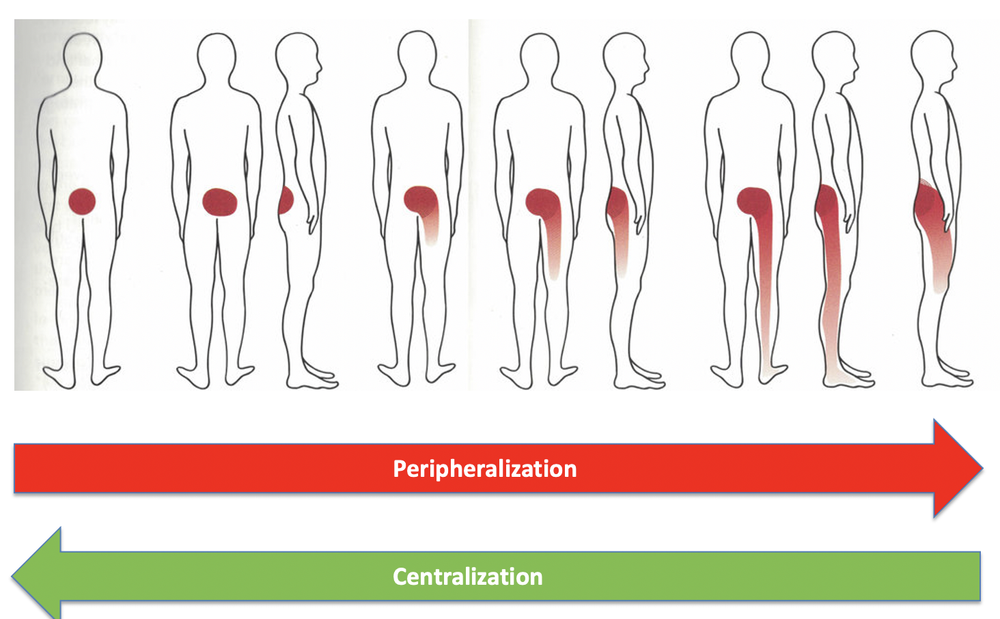
Two key features that physical therapists look for when using the McKenzie Method are “centralization” and “peripheralization.” Centralization of symptoms refers to pain that is located over the spine/low back while peripheralization of symptoms refers to pain that radiates into the hip, buttock, thigh, leg, or foot.2 The goal of the McKenzie Method is to find a patient’s directional preference and use it to centralize all symptoms. Movements that peripheralize symptoms are avoided until symptoms are well-managed.2
The McKenzie Method is an effective assessment and treatment tool for low back pain in many cases, but it is just one of the many interventions needed to achieve lasting relief from symptoms. For this reason, patients in our clinic are treated with a holistic approach that includes strengthening, movement, functional retraining, modalities, and more to ensure that we are treating all components of a patient’s low back pain and helping them to achieve the best outcomes!
References
Written by Abigail Anderson, PT, DPT